Henry and I have been running Land Talks since the start of last year.
It’s a beautiful event - upstairs in a cosy wood panelled room of the Sekforde Pub in Farringdon, London. Food in the break, tightly timed with auto-advancing slides. Ends on time. A lovely community, of a range of smart, passionate, thoughtful people.
So, why radical land policy? Why are we doing talks about that?
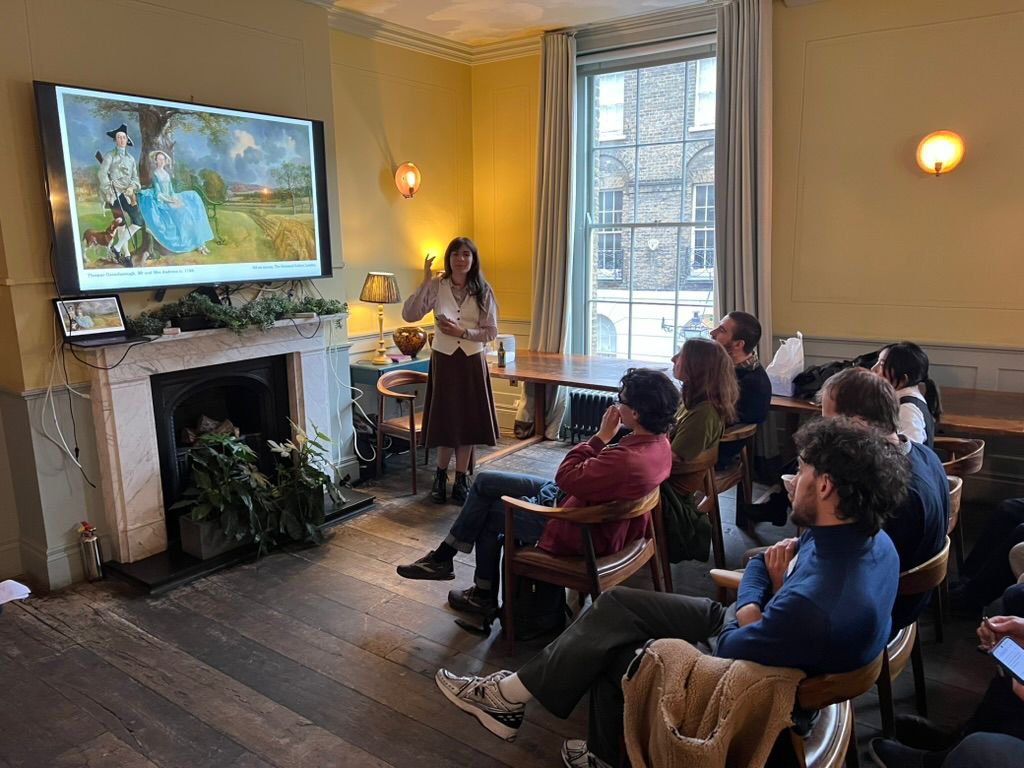
Luna Mustfa giving the very first talk
Instead of explainining, I’m going to whisk you through by example.
We’ve split the 36 talks so far into the 7 overall angles they come from. I’ll give you a taste of each talk, of how informative, funny and bold the brilliant speakers are. And link that up with an explanation of what we’re doing running land talks.
Speaker names throughout link to the event page of the Land Talks they spoke at.
Hold on to your hats! This’ll be a ride.
1. Culture
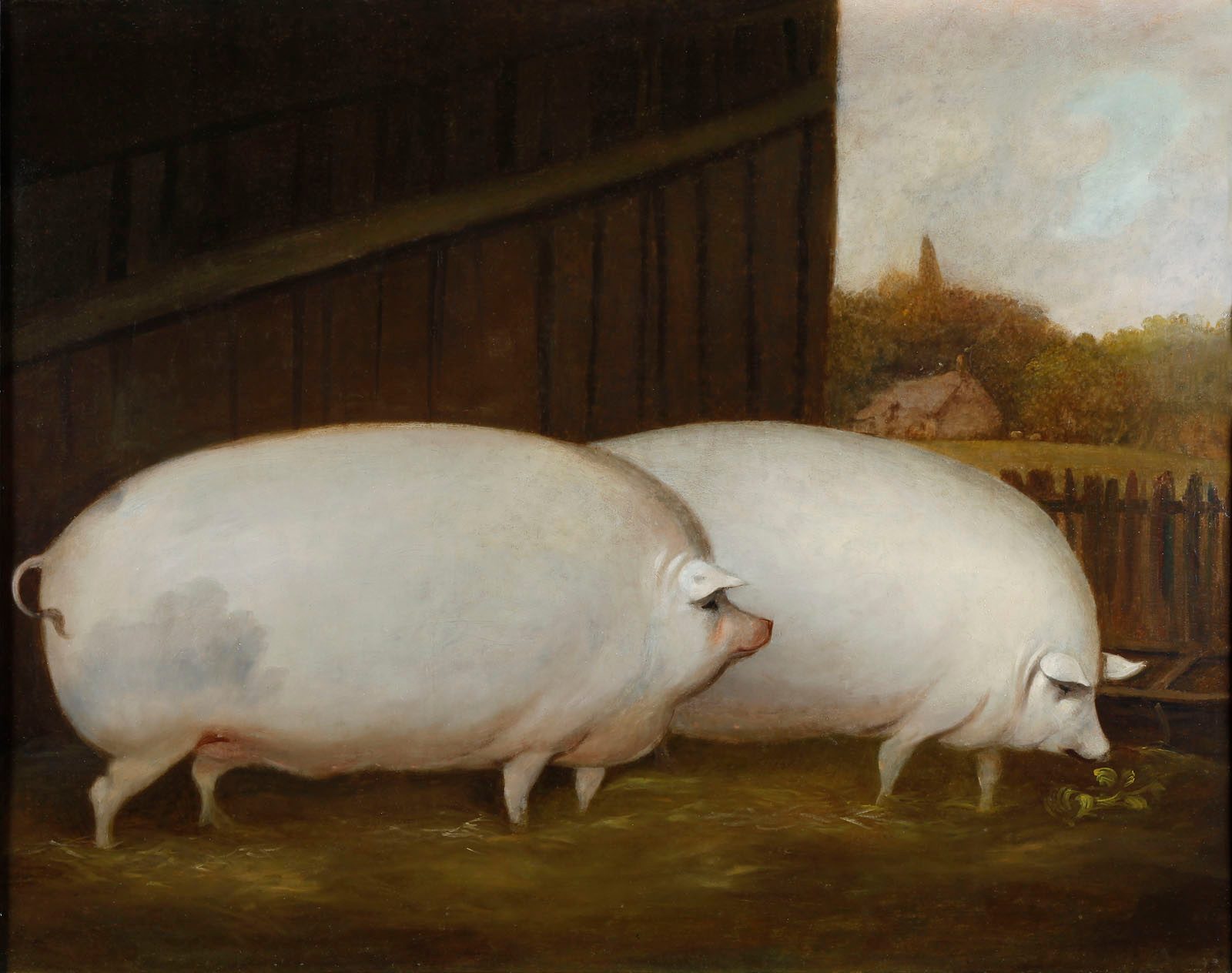
'A Pair of Pigs' by Compton Verney from Luna's talk
We like to start an evening with a more cultural talk, that takes new perspectives, and opens our minds.
-
In the very first talk ever, Luna Mustfa took us on a history of land use and status as shown by fine art. The early scenes are pastoral, and about communal working, leading up to pictures showing ownership of estates. The final paintings are of early railways cutting through the landscape, and then the complete Victorian social system visible in Ford Madox Brown’s Work - from navvies working, to fashionable ladies.
-
Alys Key went through the Kevin Costner cowboy show Yellowstone, which is about NIMBY resistance to ski resorts, airports and housing. The main character uses a range of tactics - his children, conservation orders, blackmail, sabotage. Aesthetically the pro-progress and pro-growth side has no spirit, and could perhaps offer a higher purpose, reflecting our modern world. In real Montana, the YIMBYs are winning.
2. Problem
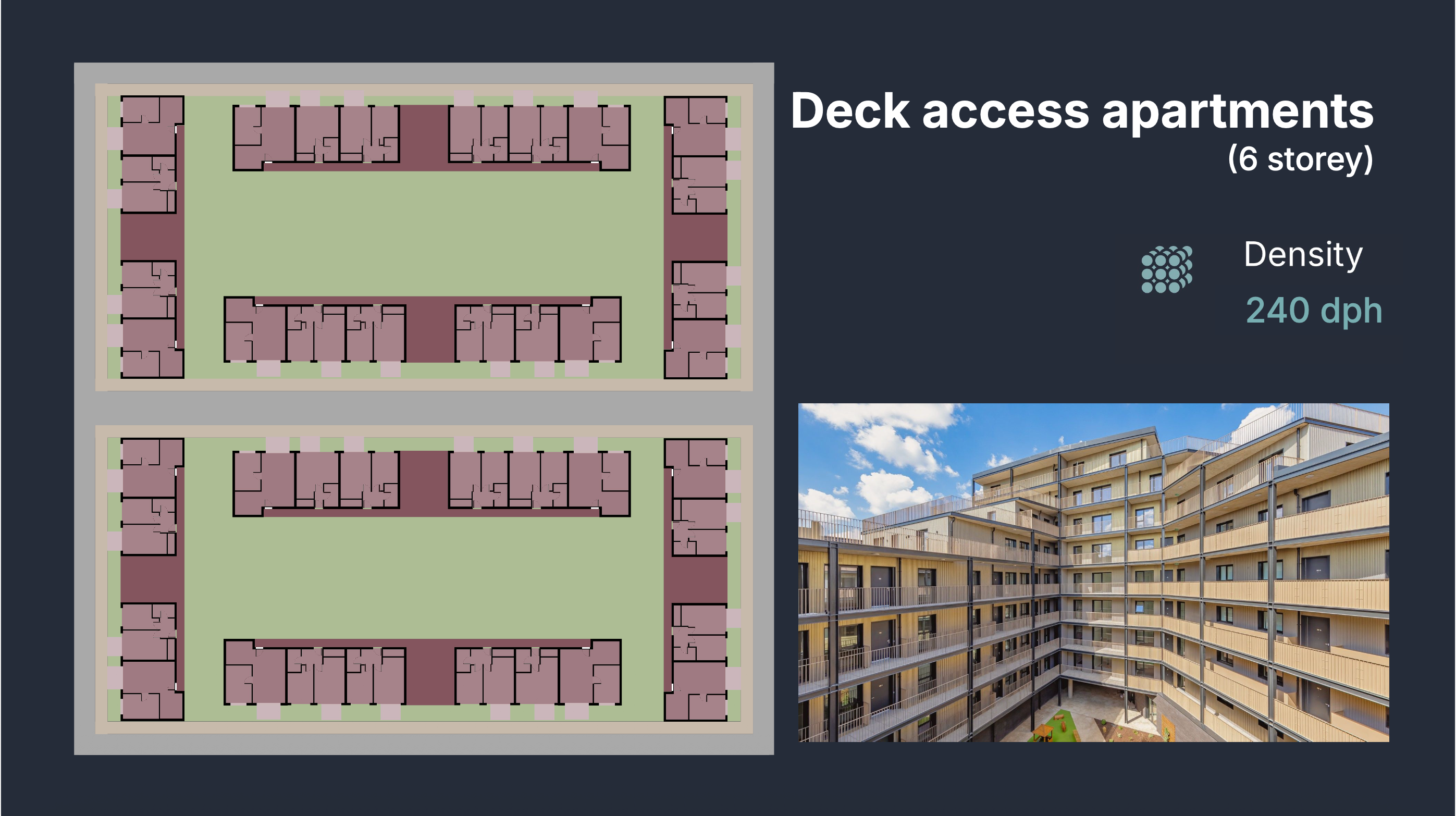
Plan of housing density from Euan's talk
One of our key goals with Land Talks is for us all to learn more of the gritty details of the problem - both as data nerds and emotionally.
There are lots of problems:
-
As an initial terrifying overview, Lauren Thomas showed us how amongst OECD countries the UK has roughly the most expensive, oldest, smallest and most poorly insulated housing stock.
-
The proportion of households renting has increased over the last few decades, and Ben Dunn-Flores explained how many now get trapped into renting permanently, and as a result don’t have a secure home. He founded a startup to try and fix this.
-
Part of this is that it’s particularly expensive to build in the UK, and quantity surveyor Chris Moore described all the factors as to why (e.g. construction cost). He concludes that who takes the project’s risks on, has a larger impact on costs than the land.
-
Euan Mills used his site planning software (see picture above) to show us how density of housing really matters, and that if we increase it, we don’t actually need that much land to build all the houses we need.
-
There are new forces that will add to land pressure, and Tym Syrytczyk (Institute for Driverless Transport) told us about one. Driverless taxis require large edge-of-city car parks, where they can recharge at night. Plus we need to make sure that their reversing warnings as they come home don’t wake everyone nearby up!
-
Jane Dowden (St Martin-in-the-Fields Charity), gave lessons from a survey of homelessness workers, on the emotional and financial cost of people being bounced between services. There’s very little slack in the system, limiting how much workers can be creative to help people.
There is plenty about the problem that we still haven’t covered… Unacceptably large numbers of people have mould in their homes, with tangled contracts/leaseholds/freeholds that stop them getting the building fixed.
Even at the wealthier end of society, the land cost makes people who a generation ago would have had a house, struggle to get the space to have children. It makes businesses hard to start, because the commercial landlord takes as much of the potential margin as possible.
Land increases the cost of everything, like a vampire on the economy - how much of your cup of coffee goes on rent, of the coffeeshop, of the barista’s home?
3. Countries
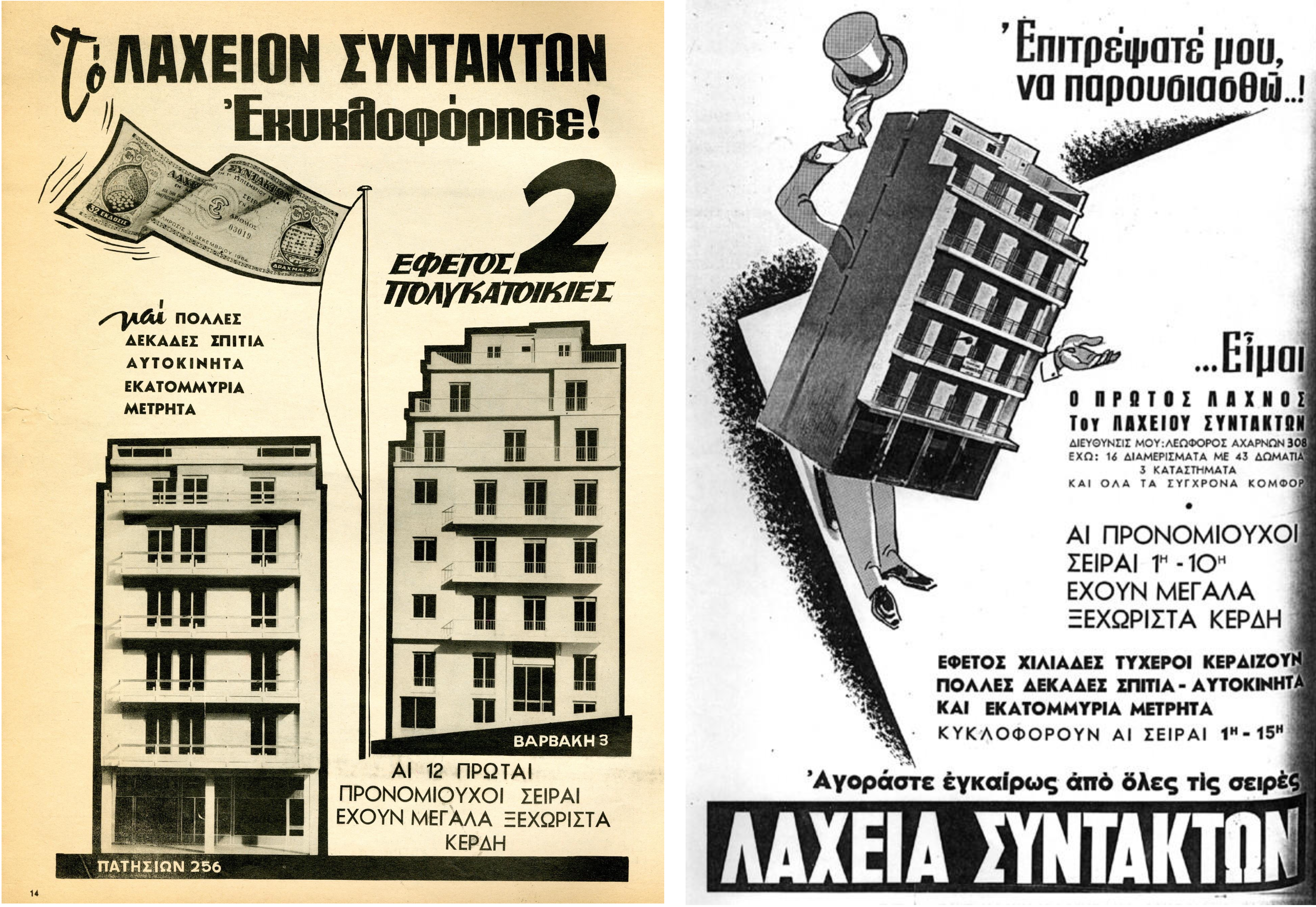
Adverts for Greece's housing lotteries from Maria's talk
Most of Land Talks is about the UK, but we think it is important to look at where things are better abroad.
-
Greece’s clever property exchange system “Antiparochi” built millions of homes. Maria Brewster explained it with beautiful photos from the full span of the C20. In short, it is a contract so a house owner and a contractor can together knock it down and build flats, safely sharing what they make.
-
Andrew Purvis dug into the history of the quasi-Georgist land system in Singapore, and the impact it has on the country. Colonial administrators originally stumbled on the policy by offering 25 year leases. By the time of the Land Acquisition Act 1966 this was very deliberate, ensuring the community benefits from increased land values due to general development. Half of public revenue now comes from land value.
-
Over in Japan, where housing is cheap, Matthew Bornholt showed us the zoning system, where planning rules are simple 2 page documents that look like something from an 80s video game manual. Britain sorely needs such clear, predictable planning rules.
-
Finally, Tim Kershaw gave us his experience as an architect in Spain. Strikingly it has thousands of planning zones with consistent rules, leading to vastly more homes being built. This turns even the corruption into a helpful force for growth - if one person bribes to get permission, lots of other people automatically do too.
It’s satisfying to know when something works in another country - it feels like the same thing could be done here at a much lower risk, for a large benefit.
4. Government
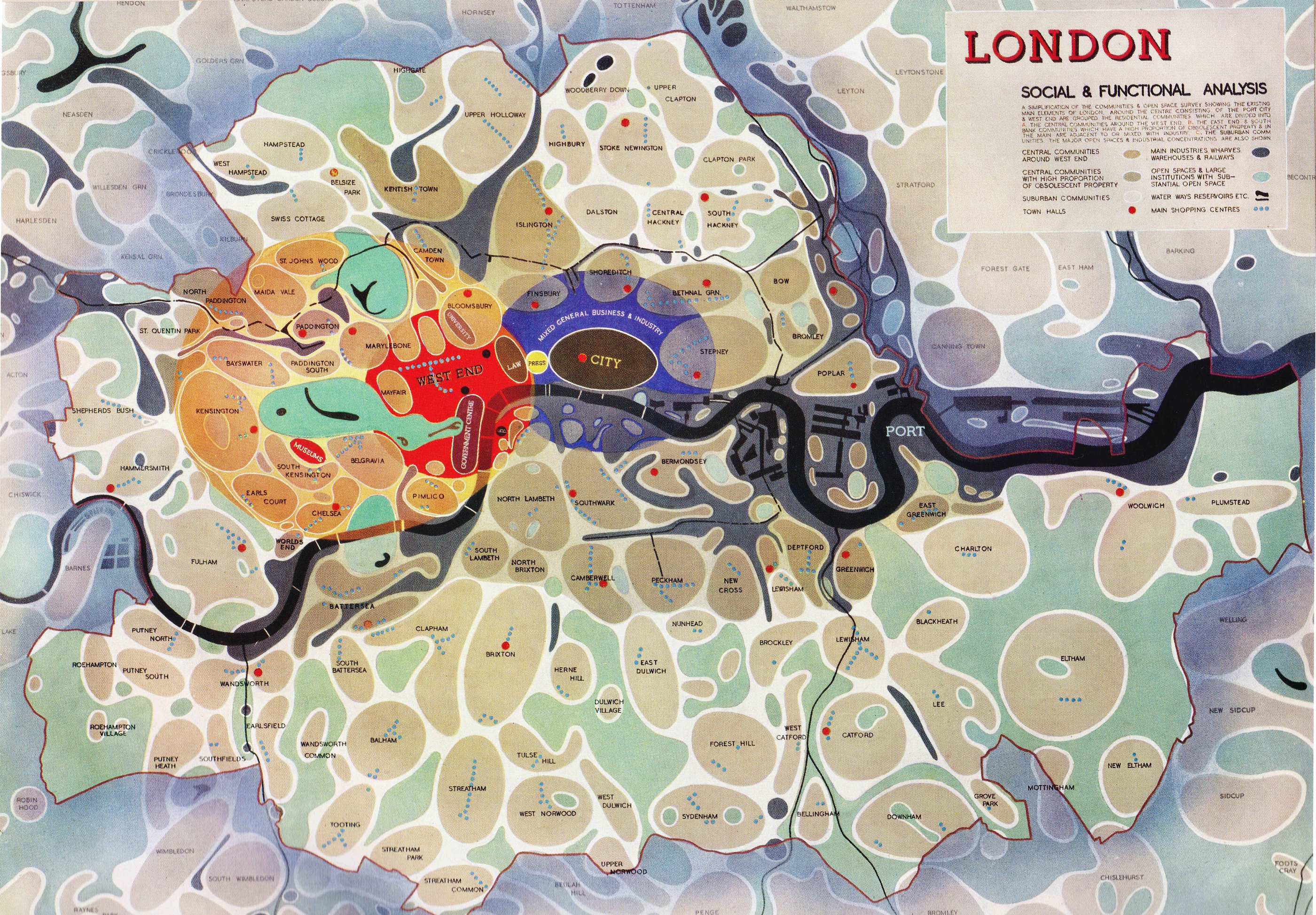
1943 London planning map from Paul's talk
So, how do we change this system? We could start with improving government. Or at least understanding when it is slow or gets in the way…
-
Most of us don’t think about how land in the general sense is allocated at the highest level - what is used for what kind of farming, what is used for woodland, how much can we use for solar power? Ted Theisinger talked us through the government’s Land Use Framework, and how he thinks we should use low productivy arable land better.
-
A free book exchange was put in an underground station, but was for a while closed due to fire safety regulation. Bilal Asghar (London Fire Bridgate) told us in detail how this happened, and showed how detailed written policies can take away accountability for poor decisions being made.
-
Fabian Chessell loved telling us the story of when, while working for the Ministry of Justice, he was hustling to get much needed new prisons built. He went through lots of trivial bolted on regulatory requirements that slowed things down, culminating in the farcical story of a little-used bowling green that was being demolished. Even though they had rebuilt a new one nearby, Sport England made them wait for the grass to grow before they could start work on the prison.
Often there are positive stories of people within government making things much better.
-
The UK Government is often world-leading at digital services. Paul Downey told us how the planning process can be smoothed with better data and better workflows, and how at the Ministry of Housing, Communities and Local Government they’ve been working on this by building the planning service.
-
HM Courts & Tribunals Service runs the service which landlords use to evict tenants. With the Renters Rights Act coming into force, this was being rebuilt, and Sinead Doyle told us how. Not only are tenants vulernable - sometimes landlords can be too, for example, an old landlady whose tenant set fire to the house that was her only income. Making the user interface and the current situation really clear is very helpful for people at an emotionally and practically difficult time.
-
Remarkably, London recently got an extension of the underground Northern Line to Battersea. Bill Chen explained how this was done with a kind of land value capture - by borrowing against future tax revenue increases. Why doesn’t this happen more often?
Sometimes these positive stories are swamped by politics.
- Over in Croydon, Maurice Lange told the story of how the council gave blanket permission for detatched houses to be knocked down and rebuilt as small units of 4 or so flats. Because small builders could make a profit, this led to rapid growth in available housing. Alas, locals didn’t like the disruption, were nervous about the change to their area - and by the time of the next election, both parties had changed policy, and it collapsed.
How we use our democracy really does matter.
5. Legal
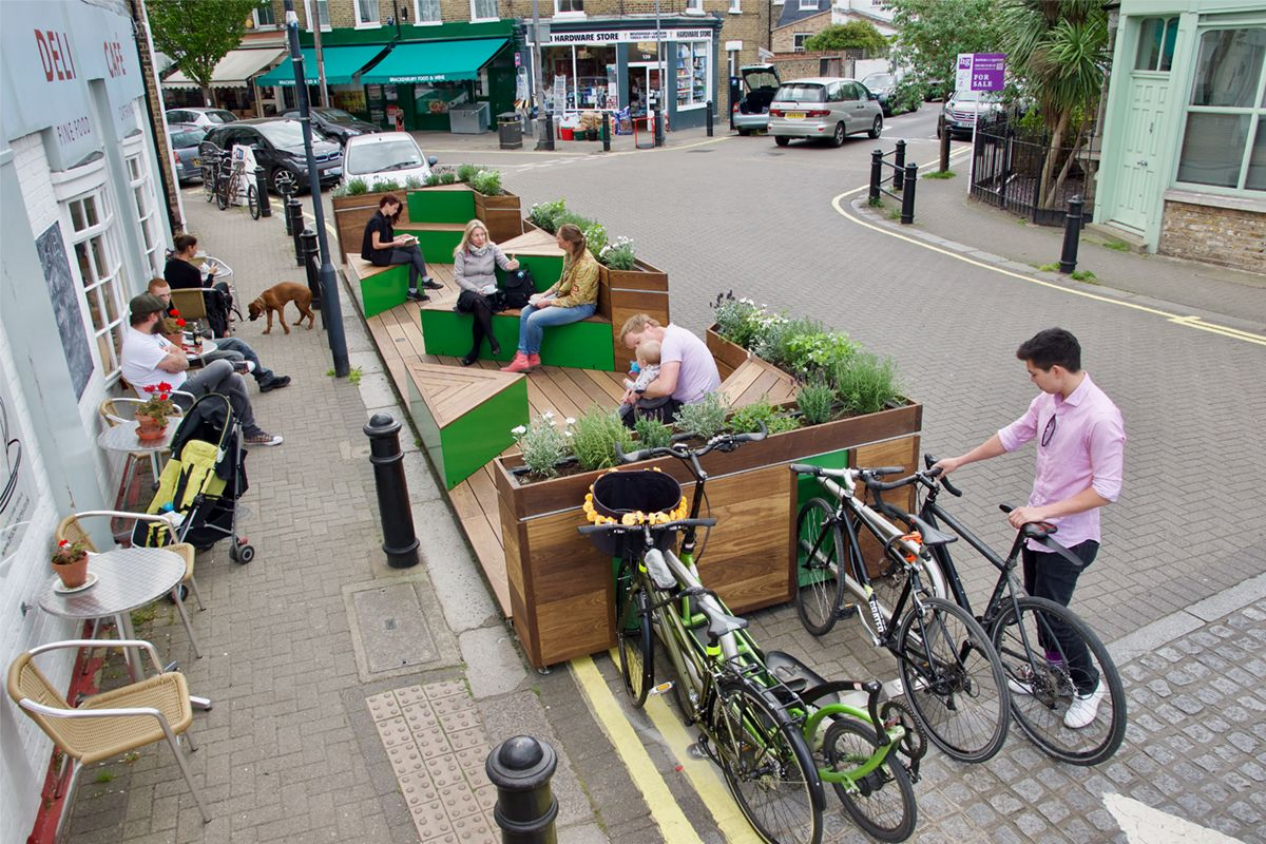
Changing regulation to allow more diverse use of street parking from Seb's talk
The next major way to improve our land system it is to change the law, or the processes which carry out the law.
Some speakers highlighted significant legal areas that need reform.
-
Benedict Springbett explained the problems caused by Judicial Review. It lets anyone block strategic infrastructure projects, costing time, money and creating uncertainty. The review itself then rarely changes anything, the process is the problem.
-
The companies which manage blocks of flats have to publish their documents at Companies House. Martin Keegan scraped and analysed lots of them to find out how the ownership works - for example, 45% of residential management companies are “captive”, which means they’re not controlled by leaseholders. There’s lots of work to do on leasehold reform.
Others are campaigining for relatively simple but significant legal changes.
-
At mySociety decades ago we used to campaign about freedom of postcodes - critical data to let us make our sites easy to use. James O’Malley has taken up this torch, explained the current status of address data, why it’s important, and his campaign to Free the PAF.
-
After starting with a wonderful history of parking, Sebastian Vetterlein suggested how we could make much better use of street space. By charging a market price for residential parking, the space would get used as miniature parks, seating for restaurants, and more. This both generates more revenue, and makes the city more creative and human.
It’s important to push for much larger legal changes too. This takes longer. In the end, having these ready at the right moment for the right govenrment will have the most impact.
-
Andrew Dixon, from the campaign Fairer Share, went through in detail how to reform council tax. Making it fairly based on current valuations (rather than ones from the 1990s!) and scrapping Stamp Duty. He gave us insights into the politics of how to get this change to happen.
-
Alastair Parvin pitched us a new class of property ownership called Fairhold, which would make it easier for everyone to own their home as a place to live in, by making it no longer a speculative financial asset.
-
The Land Justice movement is inspiringly well organised. Bonnie VandeSteeg told us about the different senses of place in the Cairngorms, and how needs of locals conflicted with needs for tourism. This led her to wanting significant land reform - more community ownership of land, including a right to buy, and transparent access to information about land developments.
Changing the law is a long process. I’ve benefited from it happening - the campaign for Freedom of Information at the end of the last century was grinding and persistent. It’s important we carry on asking for the law to be better for people’s needs.
6. Ownership
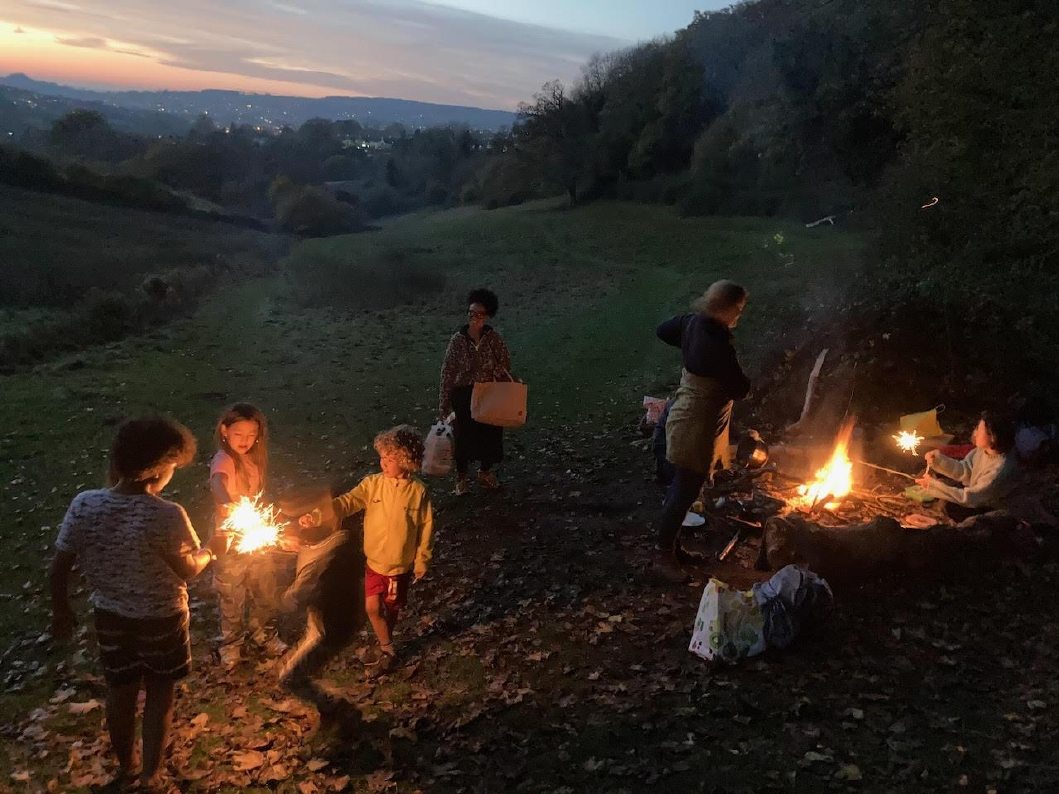
A valley in Stroud bought by the community, from Emma's talk
Much like the Open Source software movement reused the property ownership of copyright, to create things for whole communities, lots of people find new ways of using land ownership.
You can do that yourself, or as an organisation, spontaneously.
-
Jim Stichbury went on an adventure, investigating self-building a cabin in Scotland, including how to get planning permission for the land. It’s hard.
-
Ruby Sleigh told us how she is starting a co-operatively run house with friends. They’re getting support from Radical Routes, and raising money to buy a house that is in need of modernisation.
Or try to get government to do so in larger developments.
-
Mark Williams told us about economic growth in Farnborough, and how there is lots of Defence-owned land in good places that could be turned into housing.
-
Michael Taite has the idea of Stewardship Freehold Villages. These would be medium sized, having freeholds that ensure they stay semi-rural, and are more sustainable.
-
While Shiv Malik is pushing for a whole Forest City to be built outside Cambridge - the jobs are nearby, and the land is there, it just needs the infrastructure and homes building.
Or combine the two - take over larger areas of land, as a community.
- In Stroud, the community managed to buy the whole of Heavens Valley - a haven of streams, meadows and ancient woodlands. Emma Kernahan explained to us how this was possible. They got bridging loans from individuals, to quickly buy when the land came up for sale, and then got a grant from a charitable trust to finalise the ownership.
7. Organisations
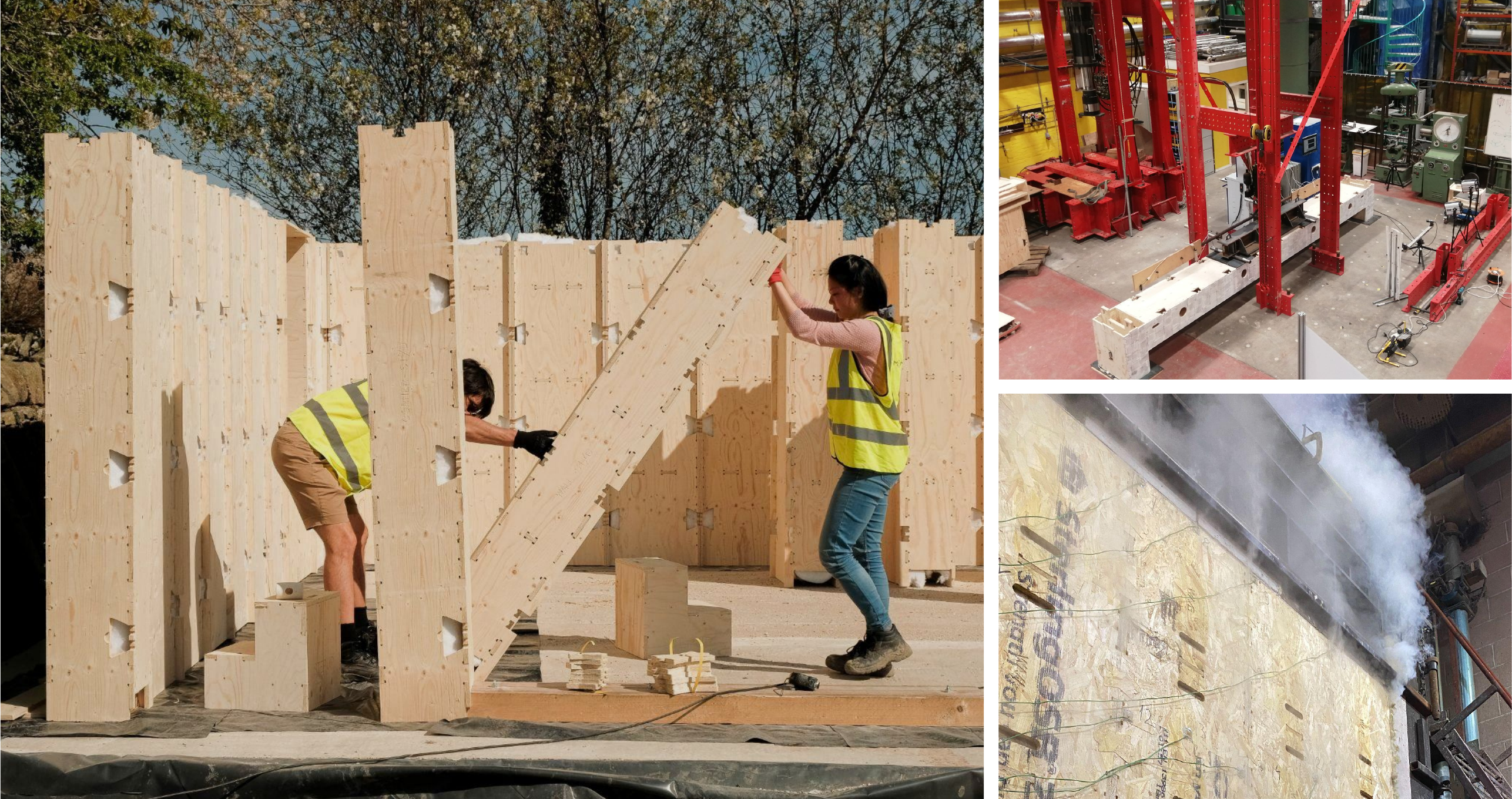
WikiHouse construction, from Amber's talk
Secretly, what I most want to be inspired by, and inspire, is new organisations.
These are easy, in the sense that anyone can set up a new organisation - you don’t need to persuade government to do something, or convince Parliament to change a law.
They’re hard in that… You need a good idea, to be enterpreneurial, to have funding, to have a way of getting money to run the organisation. When those pieces fall together, something novel and fun happens quickly.
-
Scholar and artist Eric Wycoff Rogers runs the London Night Cafe. It’s just £10 to get in all evening, including hot drinks, and you can bring whatever food you like. It feels like a cross between a living room and a place to party - with both ball pits and a library, in a central terraced house. Eric told us how it is financially viable (hint: be the only member of staff), and the loopholes in licensing laws he had to use. It’s inspiring that despite the constraints of land, something new and creative is possible in one of the most expensive cities on earth.
-
Over in Malaysia, Isabelle Castro told us about the Network School. In a fascinating special financial zone, the Malaysian Government and crypto money, ended up building a place for people to found startups. Its isolation became a pressure cooker of tension for the young people who were there. Not long after Isabelle’s talk, it was closed by the government and had to move to Kazakhstan. While this organisation doesn’t seem stable, I guess at least people are trying new things.
-
Everything else has a rating, why can’t our landlords? Savva Pistolas set up a new organisation, Flatm8, to do just that. He explains how relationships with housing unions are critical to get enough validated information to kickstart the site.
-
When Henry and I first talked about starting Land Talks, one of the first projects that came to my mind was WikiHouse. It uses open source designs to make building houses cheaper and easier. Amber Richardson explained how the designs have been improved iteratively as they were used, and the way the organisation advises people how to get the materials they need and assemble the modules in their own local supply chain. Inspiring how a different way of working can make a visible and positive contribution to our land system.
Conclusion
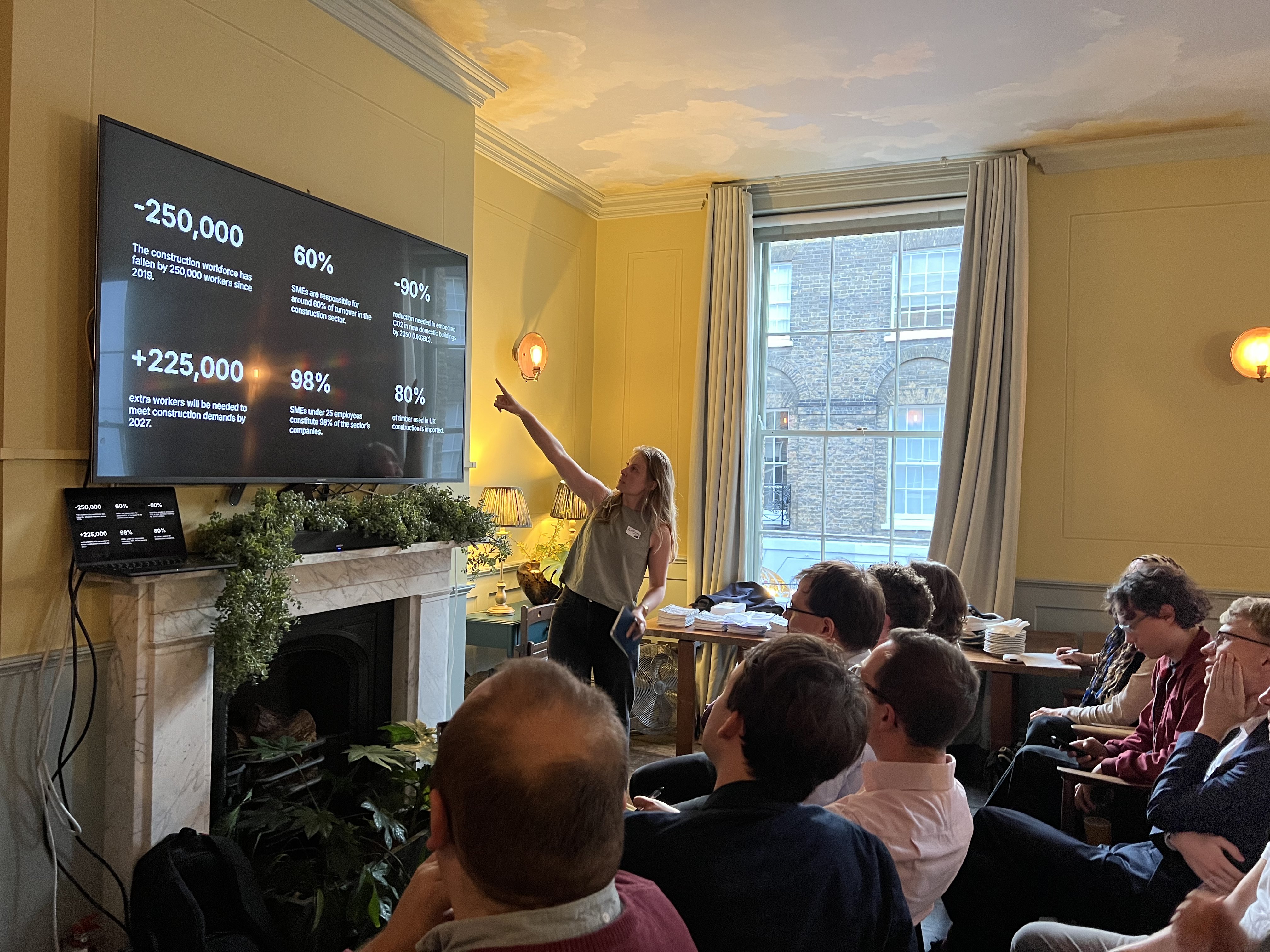
Amber Richardson speaking at Land Talks #3
It’s been fun running Land Talks.
The speakers have been passionate, intruiging, varied, engaging, funny and inspiring - here’s another “thank you” to all of them. It’s a large topic, which doesn’t seem to run out.
I’ve taken great satisfaction in running the event. Henry constantly presses us to improve things, to run it better.
Keeping to time really helps lots of people - you can reliably arrive at Land Talks at 6:30pm, see 6 speakers on fresh, interesting topics with questions, have dinner, talk to people for 30 minutes, and still leave at just 8:15pm to get home.
Our three main goals are:
-
Communicate that land is a significant issue. We’re doing this by marketing the event, and by signaling “this is an issue” so clearly to a variety of people.
-
Nourish people’s brains with nerdy details about the problems and solutions. We’ve done this via the 36 talks above - and still there’s lots more to cover.
-
Solidarity, and motivation to take action. The atmosphere at the events buzzes - it feels less lonely to be passionate about land. There’s some signs of people meeting there or hearing about projects or being inspired there. I’d like more of this.
I’m most proud that we take in a wide range of political views. The land system is a critical block in the UK, to wealth, happiness and equality. We will need to consider all solutions whatever philosophy they come from, and implement many of them, to have an impact.
Come along! We’ve two more events this autumn, you can buy tickets on Luma. It sells out.
And if you’d like to speak, or suggest someone you think should speak? Email me.
Loading responses…