Blog

Instalamb, my browser plugin to control Instagram

Lots of dancers, civic society organisations, artists, musicians, clowns are only on Instagram. Unfortunately, my mind finds the platform distracting and overwhelming - for my own accessibilty I need to tame it.

I prototyped a web browser plugin for this in my week making something every day, and it’s now pretty stable. Try it out!

Plugin store links: Firefox Instagram Plugin, Chrome Instagram Plugin

It has a bunch of features for you to take control of Instagram, but the critical one is stopping AI recommendations, so you can just view the accounts you’re following without being pulled into something you didn’t want to spend time on.
Continue reading →

My mind sampling results

One of the projects in my week long hackathon was to make a system to sample my own mind with a random alarm.

This was crudely based on Hurlburt’s Descriptive Experience Sampling - there are lots of papers about that method, for an introduction see this overview BBC article or my own post about a book on the topic. Hurlburt has for a few years now released videos of the method in progress, which are long and excellent - I’ve watched a lot of the first batch sampling Lena.

Continue reading →

Announcing "Mindful Media Club"

I’m starting a meetup / online commnunity to share tips on skillful use of social media.

Things like browser plugins that let you customise YouTube, tips on settings, social practices like how to form a healthy active WhatsApp group for a particular purpose. And so on.

Sign up to the first event if you’re in London and you’re interested!

Wherever you are, there’s a Discord. The aim is to make an online guide with all the tips in, depending how it goes.

Continue reading →

A week making something each day

As a challenge, last week I made five things, one each day. Each had to be finished in some sense, and preferably published. This is what I made and what I learnt!

Monday - Godot game

My goal was to learn Godot enough to write some kind of video game and publish it, all in one day. Incredibly this was fairly straightforward. Things I learnt:

  • This video tutorial and the text one in the main docs are both great starting places.
  • Physics engines are really good and easy to use compared to when I last coded games with them which was in 2002.
  • Open source game engines are genuinely very mature
  • It’s satisfying making something that just runs locally and is very visual

Itch.io is extremely generous with letting you just make a page for your game. It’s pretty liberating - no servers or DNS to think about like with a website, and no complicated signing mechanism like an iOS app. Although, I’m not confident the Windows build I made worked, only the Mac one…

Continue reading →

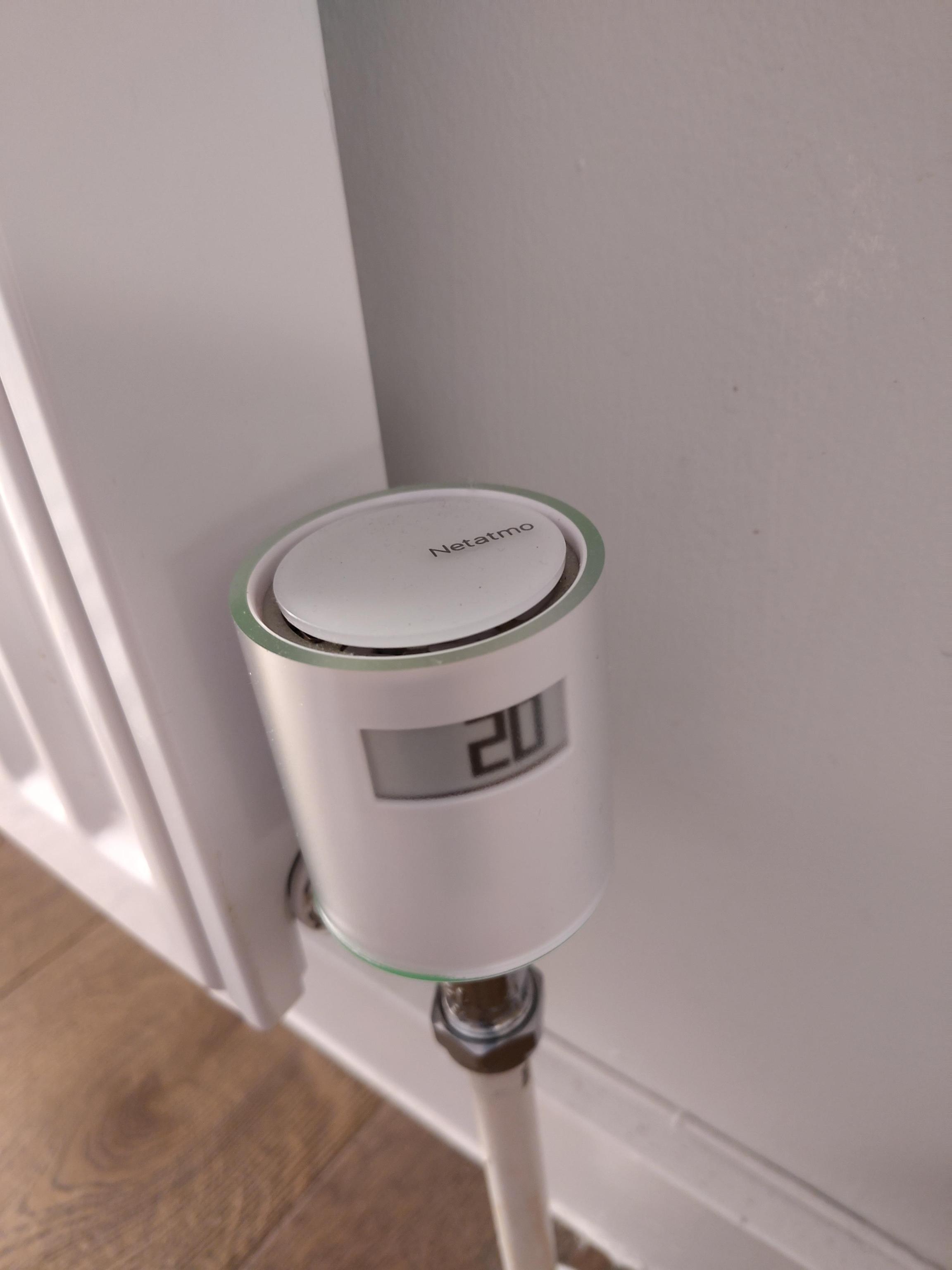
Netatmo smart thermostat! How much gas I saved last winter, and how to automate it to turn off when out (not using IFTTT)

This post has two sections, one about gas prices and energy savings, the other about Android automation and the Netatmo API.

1. What a smart thermostat is like and how much money I saved

Last year, with gas prices going up, I decided to get smart radiator valves. I’d thought the saving from these would be by only heating rooms when I’m in them. I was lazy about going round and adjusting the manual radiator valves several times a day!

Continue reading →

The little differences between Android and iOS in 2023

These days I alternate mobile operating system. Partly because as an app-making professional I strongly feel I need to understand both, and partly because it slightly irritates people who are die-hard fans of one or the other.

I don’t particularly love either - a plague on both their houses. I’d rather we all used a fully open operating system, or there was a lot more competition and a standard application platform. Still, they work, and both have lots of delights.

Continue reading →

What is high-quality about the data that trained generative AI?

Our brains have 100 trillion connections. Large language models have up to half a trillion, a trillion at most. Yet GPT-4 knows hundreds of times more than any one person does.

Geoffrey Hinton, deep learning pioneer

The recent surge in interest in generative AI was sparked by neural networks trained on high quality public, human culture.

Their use of this culture is extremely focussed - they only saw good quality inputs, and only saw each input once (see the paper One Epoch Is All You Need for why). If you show them lots of bad quality stuff, they’re not adaptive enough to tell and ignore it.

Continue reading →

This kind of rosy yellow glow in my head

A book review of “Describing Inner Experience? Proponent Meets Skeptic” by Russell T. Hurlburt and Eric Schwitzgebel (2007)

A couple of years ago I realised I didn’t have a visual imagination.

This was ultimately quite inspiring - it’s led me to ask maybe a hundred people about their own inner lives. The answers so varied, I’m left in wonder at this hidden world that we barely talk about.

My favourite source about this is “The pheneomena of inner experience” (a paper by Heavy, Hurlburt 2008). It uses a method (Descriptive Experience Sampling, or DES) to randomly beep a bunch of volunteers in their every day lives, and get them to then capture their current mental phenomena.

Continue reading →

Art I enjoyed in 2022 - top eight

To my surprise this list is television heavy - I didn’t find any incredible new board games, and I was disappointed in most video games. It’s somewhat in order - my favourite is roughly last.

Thanks everyone who recommended these to me - you know who you are! I’m not going to link to where to watch things - for TV and films I use JustWatch to find a suitable source.

Continue reading →

On intuition's relationship to rationality via language

A three year old draft blog post I just found. Feels worth publishing - the improvements in AI since then if anything make it clearer, and all the “right now” caveats justified.

It’s better to start by thinking of us as pattern matching devices first.

Not simple ones - such as modern deep learning AI that essentially does layered functions to measure correlation. Complex ones, that model causality in a sophisticated way we don’t remotely understand yet.

Continue reading →