Blog

On the need for a new profession

Complaining that I have a deluge of interesting things that I never get round to blogging, Neil suggested I use audio instead. Here’s the first one.

listen to “Public Knowledge Gap Filler, a new profession” on Audioboo

// < ![CDATA[ (function() { var po = document.createElement(“script”); po.type = “text/javascript”; po.async = true; po.src = “http://d15mj6e6qmt1na.cloudfront.net/assets/embed.js”; var s = document.getElementsByTagName(“script”)[0]; s.parentNode.insertBefore(po, s); })(); // ]]>

Links to the topics in this audio blog:
Continue reading →

Part 2: Why I think PledgeBank failed, when GroupOn and Kickstarter flew

This is the second part of a series of two posts. Part 1 explains how we came to make PledgeBank, what it does, its similarities to GroupOn and Kickstarter, and how we iterated on the product. It ends asking, “Why did GroupOn and Kickstarter succeed, when PledgeBank failed?” This part gives my answer.

Here’s what I think:

1. Giving up.

In his essay “How not do die”, Paul Graham points out that the real reason startups fail is that the founders give up. They stop changing the product, they stop doing deals.

Continue reading →

Part 1: Why did PledgeBank fail when GroupOn and Kickstarter flew?

“I’ll do X but only if N other people will do Y”

I was abuzz.

A cafe in Holborn. 2003. A secret meeting. James Cronin and Tom Loosemore, who’d made the genius does-what-it-says-on-the-tin FaxYourMP, bought me coffee and changed my world.

Wow, there’s actually other people who think computers can revolutionise democracy!

And they’ve an amazing top secret, ludicrously ambitious project to repurpose the whole of Hansard to make Parliament easy for the masses.

Continue reading →

Newsflash: Geeks now good at usability, everyone else crap

We really struggled.

We felt guilt. Wracked with pain.

It’s the mid 1990s, and computers are impossibly hard to use.

Anyone who could program them, and who also cared about people, was ashamed.

So we fixed it.

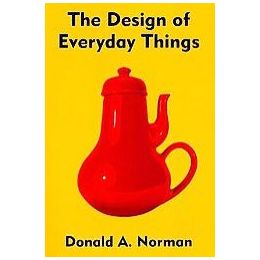
Books were published, websites launched, a new profession was born.

It took a while but many of the key insights from that furore benefit us all every day.

For example, on an iPad, or in Google Docs, you don’t need to remember to press save to not lose your work.

Continue reading →

Astonishments, ten, in the history of version control

“If you really want to … truly ancient history, you have to go back to delta decks on punch cards.” (Jim Rootham)

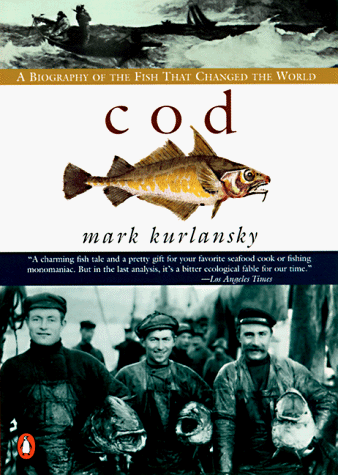
In a world where [biographies of cod](http://www.amazon.co.uk/Cod-Biography-Fish-Changed-World/dp/0099268701) are not just accepted, but rightly popular, it wouldn't seem entirely crazy to write a history book on how computer programmers store the vital product of their labours - source code.


Since neither you nor I have time to read or write such a thing, we’re going to have to settle on this one blog post.

Continue reading →

Why I just joined the Green party

I’m pretty sure lots of people are going to ask me why I just joined the Green party, so here’s the reasons.

  1. I’ve moved to an area of Liverpool where green is strong - two Green councillors live nearby, there’s a very local organic box delivery, and the main indy co-op food shop has just moved up the road. It’s nicer to be in a party when there is local activity to join in and build on.
  2. Since I’m no longer being paid to work for mySociety, I’m no longer worried about any accidental partisanship being a member of a party might bring. Not that I think you can’t be a good civil servant or work for mySociety if you are a member of a political party, but it requires extra energy. Lack of bias is extremely important for both.
  3. I’m quite worried about Climate Change (and other things). We need to continue to try to both prevent it and to build up our societal resilience to deal with the consequences of it. We can’t do either unless we act in groups, and politics is part of that. More on this another time.
  4. Strategically I think the Greens are where it’s at in Liverpool. Democratically, i.e. to meet the needs and wishes of Liverpudlians, what Liverpool needs is a (slightly) more “left” party than modern Labour. Every city needs a strong opposition, and the Greens are the best candidate.

Finally, and to be clear, I think the Labour party, Liberal Democrat party and Conservative party are all excellent. I think the recent Labour Government did many good things particularly in its first term, and I think that the Tory/Lib Dem coalition is doing many good things and will continue to do so too.

Continue reading →

What's a "startup" and why do I care?

You know when you have those really annoying arguments that turn into disputes about definitions of words? And they end up a tangled mess of pointlessness, and you just don’t want to be there any more?

Well, I’ve just realised that they’re much more important than I thought, but you have to think about them in terms of shared group culture. By which I mean, lack of shared group culture.

Continue reading →

Seven facts about the Global Village Construction Kit

Every now and again a project comes along that could change everything. I’ve been lucky enough this year to come across two of them.

The first I wrote about in Seven facts about Unhosted. It has the potential to decentralised the web again, while simultaneously keeping it just as easy to use and powerful.

Today I’m writing about the Global Village Construction Set. It has the potential to decentralise our industrial society.

Continue reading →

We take extraordinary business models for granted

It’s really easy to get used to business models. As if they were natural things that have always been there.

But actually, all the successful machines that make money were at one point extraordinary - inspired wonder when the first company found them.

Here are some recent examples:

1) Flickr. Invented “freemium” for SaaS on an at all large scale. Before then on the Internet you had to either buy things, or things were free.

Continue reading →

Seven facts about Unhosted

Unhosted is finally the project I’ve been waiting for, that stands a chance of decentralising the web.

Unhosted logoIt separates application writing from hosting your data. Encryption magic means that neither the writer of the application nor the storer of your data can access your data.

This will empower users, create more competition and boost open source web applications.

I’m sufficiently excited about Unhosted that I decided to tweet once a day about it for a week. Here’s what I said:

Continue reading →